National News Roundup: Year 2, Week 5 (February 18–24)

Ernest Blaikley, via Wikimedia Commons

Folks, you seriously don’t even wanna know how many articles I have combed through on the topic of Parkland and/or gun control this week. I’m afraid most of it is a flaming trash heap — I particularly loathe the part where we apparently dox and threaten teen shooting survivors now — but I’ll try to give you the ten cent tour anyway. Bear with me and bare your teeth, because we have a long road ahead of us.

Standard standing reminders apply: I am no journalist, though I play one in your inbox or browser, so I’m only summarizing the news within my area of expertise. This week’s news contains some detailed analysis that’s outside my expertise — I’m a lawyer, not a Simpsons writer! — but all offroad adventures are marked with an asterisk. Okay, I think that’s about it for the disclaimers. Onward to the news!

Constitutional Crisis Corners:

So much positive change happened on the Russia Investigation in one week that I’m tempted to wonder whether Trump’s gun control antics are an attempt to distract us — although Occam’s razor suggests that he just really is that terrible. At any rate, here are the Russia-hued highlights:

  • The Nunes Memo: Somehow Still Topical. The House Democrats released a version of their counter to the Nunes memo this week, after substantial redaction at Trump’s direction. The report, at minimum, confirms that the Steele dossier wasn’t the basis for the Russia investigation; it does not, however, clear up the arguments over McCabe statements very much. All told, it’s minor support for the idea that Nunes is an jackass with a selective memory, but we basically knew that already.
  • Skadden Lawyer Pleads Guilty. On Tuesday, Mueller finalized a guilty plea and cooperation from Alex van der Zwaan, an attorney who spoke regularly with Manafort and Gates in fall 2016. Though this is far from the most interesting or important thing to happen in the past week, it probably did serve as a stepping stone to some of the later activity in the week, particularly when the Gates plea did not finalize as early as expected.
  • The Increasingly Elaborate Manafort-Gates Saga. The real meat and potatoes of this week’s Russia Investigation news is all of the news on Robert Manafort and Rick Gates, two sketchy dudes who worked on and headed the Trump campaign (respectively). Despite expectations, Gates had not yet plead guilty by the beginning of the week (though, as I noted above, van der Zwaan did). But then Mueller released new, additional indictments for both Gates and Manafort mid-week, significantly broadening the risk of exposure if they don’t cooperate. Having read the indictments, I can personally confirm the new indictments are wild, y’all — it’s a zany tour of how many different ways two people can commit tax and bank fraud to the tune of millions upon millions of dollars. The indictments also have a surprisingly complete account of wrong-doing for the incredible reason that Manafort made Gates convert all his Word documents to PDF, resulting in a paper trail for every fraudulent record created. Against that backdrop, it’s not surprising that Gates did ultimately plead guilty in exchange for cooperation and a reduced sentence by the end of the week. I hope his defection flips Manafort like a day-old pancake.

Your “Normal” Weird:

  • Ted Cruz vs the Simpsons. Ted Cruz won the undying animosity of Simpsons showrunner Al Jean this week by announcing that “the Democrats are the party of Lisa Simpson, and Republicans are happily the party of Homer and Bart and Maggie and Marge.” How Maggie has a political party as a canonical infant was not explored in the statement, though Al Jean had a lot to say about it. Meanwhile, liberals are proud to align with Lisa Simpson, who I’m not ashamed to admit was a role model for me when I was her age. (I was six when The Simpsons premiered, and now that I’ve pointed this out you get to feel as old as I do. You’re welcome.)
  • Thank Goodness Trump Created the Rating System. This week’s subtheme of Incredibly Weird Comments about Pop Culture continues with some statements Trump made proposing a rating system for movies and video games as a solution for mass shootings. Which, in Trumpland, we apparently don’t already have, and apparently didn’t first adopt in 1968. Seriously, the movie rating system is so old that it has been in place Trump’s entire adult life, and even the video game rating system has been in place for twenty-four years. And, of course, this doesn’t even consider the fact that there’s no documented evidence for the link between movie violence and real-life violence. So, in basic summary: Yeesh.
  • White House Shenanigans. There was a fair amount of ridiculous White House shenanigans this week, which basically makes it like any other week since January 2017 but here we are. First in the queue, Trump pressured Sessions to do his first sanctioned investigation relating to Russian election interference — but not on Russia; that would make way too much sense. Instead, Trump is badgering Sessions to investigate Obama. (Fun fact: The reason Obama couldn’t do more about Russian interference is well-documented, and it rhymes with ‘SchmcConnell.’) As though to punctuate the White House dysfunction, while all this is going on there has also been an epic standoff between chief of staff John Kelly and local son-in-law Jared Kushner about Kushner’s security clearance, which still hasn’t been finalized after a year of investigation. My bet is that this will keep happening in the background of everything else this administration does right up until Trump is impeached or Kelly is fired. Whee, nepotism!

The Bad:

The Good:

  • Recent Court Wins. The Supreme Court declined to subvert ordinary judicial process today, refusing to hear the DACA injunction case before the 9th Circuit did. This was the expected outcome, but it’s still very relieving to hear; the court would not have been signaling anything good if it had met the Trump Administration’s demands and heard arguments. And in other good legal news, the Second Circuit held that federal discrimination laws also prohibit discrimination based on sexual orientation, making them the second circuit in the United States to do so. As a bonus, this court ignored a Trump memorandum stating the direct opposite in order to reach its conclusion — and it’s not even one of the two circuits that are known for thwarting him. Between the two decisions, it’s a happy day in Legal Schadenfreude Land.
  • Kentucky Special Election Results. A deeply red district elected a Democrat to the Kentucky House in a special election by a landslide 49 points this week, though the House itself will still be GOP-controlled. This is exciting because it’s such a huge change from the area’s traditional voting patterns, potentially forecasting the extreme landscape change we might see later this year in midterm elections and beyond. (Admittedly nothing is set in stone, but I’m daring to dream here.)
  • Parkland Organizing Continues Too. The flip side to the horrorshow outlined above is that some good advocacy and organizing have happened in the past week, too. Many, many companies have cut ties with the NRA in the past week, particularly after the NRA started expressing nasty sentiments about Parkland teens. And the teens themselves have continued to advocate in town hall meetings, interviews, and sessions with legislators, and a town hall hosted by CNN resulted in some deeply satisfying (and completely deserved) Marco Rubio savagery. My favorite, incidentally, is the teen who observed that we should call AR-15s ‘Marco Rubios’ because they’re both “so easy to buy.” Yikes.

And that’s all the news that’s fit to print this week, though much of it barely merits that kind of dignity. If you made it all the way through, my ice cream and I salute you. Here’s hoping next week is less terrible.

National News Roundup: Year 2, Week 4 (February 11–17)


Last week, the news was so overwhelming and demoralizing that I kicked a few stories from Monday out to the following roundup, hoping that things would be calmer then. I of course should have realized that by doing this, I virtually guaranteed that this week would be even more Chaotic Terrible than the last one. Sorry for jinxing all of us, folks!

Standard standing reminders apply: I am no journalist, though I play one in your inbox or browser, so I’m only summarizing the news within my area of expertise. This week’s news contains some detailed analysis that’s outside my expertise — I’m a lawyer, not EPA security detail! — but all offroad adventures are marked with an asterisk. Okay, I think that’s about it for the disclaimers. Onward to the news!

Constitutional Crisis Corners:

This week started out a quiet time for the Russia Investigation, but it definitely ended with a bang! Here’s what I have for you:

Your “Normal” Weird:

  • What Rules of Professional Ethics? The White House attorney stable (and top DoJ staff, who clearly think they have a stall in that barn) have managed to lower my professional opinion of them further this week — which is kind of a neat trick, because I didn’t even know that was possible by this point. First prize in appalling practice goes to long-time Trump attorney Michael Cohen, who announced this week that he personally paid Stormy Daniels $130,000 to shut her up in 2016. For those attorneys reading this and thinking “Wait, did he just admit to a blatant violation of the Rules of Professional Ethics while violating client confidentiality and breaching a nondisclosure contract at the same time?” — why yes, yes he did. Stormy Daniels, bless her, has already announced that she is now free to talk about the whole thing, because Cohen breached the NDA agreement.
  • DOJ Deserting and Dog Whistles. Though my best antipathy goes to Cohen this week, there’s still plenty left over for the Department of Justice. Rachel Brand, third in command after Rod Rosenstein and Jeff Sessions, announced that she’s stepping down after just nine months at her current post. Though she’s ostensibly leaving because the legal department at Walmart was just so attractive, several sources note that she was very frustrated by all the vacancies in her department and afraid she might have to supervise Mueller (with all that would entail) if Rosenstein was fired. Against that backdrop, it kind of underscored the point to watch Jeff Sessions discussthe Anglo-American heritage of law enforcement” this week. Though the department defended his statements as a simple reference to common law, you cannot convince me that was anything other than an intentional dog whistle — a normal human being would have simply said “common law,” which is a much more common phrase, and the use of the word ‘heritage’ is kind of a glaring neon sign. To be fair to Rachel Brand, I wouldn’t want to work for Donald “I Fire You Cause It’s Tuesday” Trump and the Racist Brigade anymore, either.
  • Weird White House Odds and Ends. Disturbingly, the previous two headers are not the end of the wacky news coming out of the White House this week, because we haven’t even gotten to the non-lawyer shenanigans yet. Despite all probability, somehow the White House is still tossing out Porter-related prevarications, with the never-ending string of lies making it look more and more likely that the White House knew about his domestic violence the entire time and he was affirmatively not cleared for his position because of the blackmail potential his abuse history created. And, as if to punctuate that point, Reince Priebus soundbites have started coming out about his time as White House Chief of Staff as a book about the position gets ready to launch. News outlets are already having a field day with one choice quote, “Take everything you’ve heard and multiply it by 50” — probably because this administration is such a goat rodeo that we don’t need more words than that before we believe it. But Vanity Fair gladly gives us a panoply of choice excerpts from the book anyway, and they’re all pretty much exactly as horrorshow as you might expect.

The Bad:

The Good:

  • Recent Court Case Wins. A second district court enjoined the Department of Homeland Security from enforcing the DACA repeal on March 5 this past week, putting more pressure on the administration to avoid deporting people who participated in the DACA program. (You’d think the first case would be its own deterrent, but let’s face it, this bunch isn’t noted for listening to courts.) And just today, the Pennsylvania Supreme Court issued a new districting map, making good on its threat to turn this judicial car around if Democrats and Republicans couldn’t draw new voting districts on their own. So now that task is definitely done before November elections, which is a really important development in a swing state that just barely broke for Trump in 2016.
  • Parkland Kids Owning Politicians Left and Right.* The kids most directly impacted by Wednesday’s shooting are acting more mature and decisively than the rest of us put together, organizing marches and calling out politicians as well as the NRA. Their candor is as exemplary as it is horrifying; I hope the rest of us step up to the plate soon, because traumatized high schoolers should not be forced to be the adults here.

And that’s all the news I have for you this week, in its technicolor and vaguely nauseating glory. Hopefully next week will be better, and you’ll hear from me either way. In the meantime, I’m off to spend some quality time with my freezer’s ice cream selection.

Marjory Stoneman Douglas and Dorothea Dix: Unpacking Mental Health and Mass Shootings

By Coral Springs Talk from Coral Springs, United States (Rally at Marjory Stoneman Douglas High) [CC BY 2.0 (https://creativecommons.org/licenses/by/2.0)], via Wikimedia Commons

There was yet another horrendous school shooting in Parkland, Florida this week, and the country has begun our by-now-traditional cycle of arguing and politicians offering thoughts and prayers and nothing changing. You see, whenever a mass shooting shooting, in the immediate aftermath most citizen responses fall into one of three categories:

  1. Expressions of sympathy, horror, and shock relating to the nature of the tragedy;
  2. Calls for (and responses to calls for) tighter gun control; and
  3. Discussion surrounding the gunman’s mental health, access to mental health services generally, and rates of violence perpetuated by and experienced by people suffering from mental health issues

It would be inappropriate for me to comment on the first type of discussion, except to say that I am sympathetic, horrified, and saddened by the tragedy as well. And though I have many opinions about the second— I did work nearly five years at a public defender office in one of the most gun-control-loving states in our country — that’s another article for another day. As your Friendly Resident Clinician-Trained Advocate, I’m here today to talk about the third topic–because I’ve been writing about it for years, and it would appear that this issue has reached Craig Ferguson o’clock. If you’re in a hurry and want to know my point upfront, here it is: Most people with mental health issues don’t shoot people, and we have no way of knowing whether better access to treatment would have prevented this tragedy, but we should have better access to mental health treatment anyway.

Are you still with me? Okay, good, because we need to spend a few minutes talking about what ‘mental health issues’ even means.

(This is an important point, because as it happens it’s not universal, and this impacts conversations on the topic something fierce.)

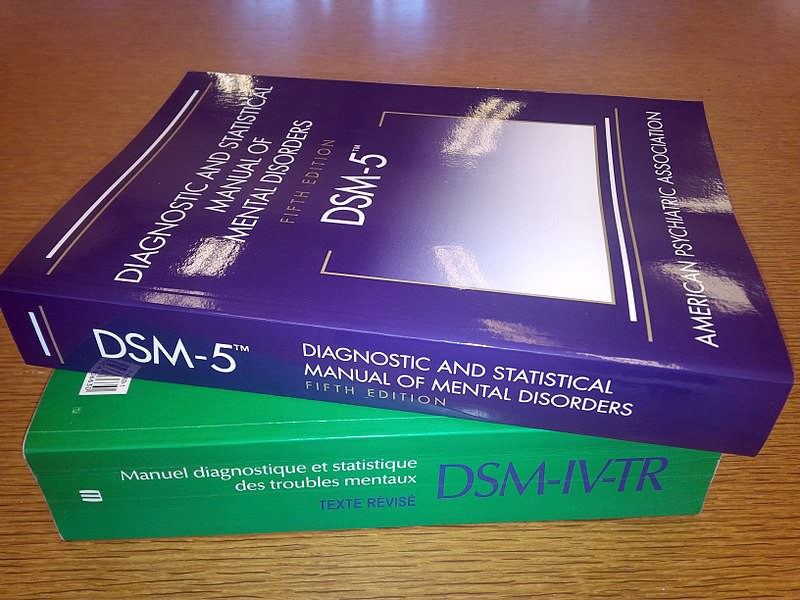
The most commonly accepted (though not universally accepted) definitive text for what constitutes ‘mental illness’ is the Diagnostic and Statistical Manual of Mental Disorders. We’re currently all using the fifth edition, which was published in the spring of 2013. The DSM uses a code system in order to assist physicians and healthcare professionals with providing diagnoses. These codes exist for literally hundreds of distinct disorders, covering everything from mood- and anxiety-based disorders to pervasive developmental disorders to substance-related disorders to psychotic disorders to intellectual disability to personality disorders.

Symptoms of these disorders vary wildly, and it is straight-up medical malpractice to prescribe the same treatment for every disorder. In fact, not every mental health professional is even allowed to diagnose every single disorder on this list–some disorders (like, for example, Autistic Disorder) require screening by a neurologist. About one in five American adults has a diagnosable mental health issue, and these disorders impact every known demographic in this country (though some disorders are known to disproportionately affect populations above or below a certain age, and diagnosis for some, like personality disorders, is contraindicated before a person turns 18).

[Thus concludes the lecture section of this presentation. For now.]

‘Why are we talking about definitions here?’ I hear you ask.

I note all of this because it all adds up to mean that there is no one individual thing that every single person struggling with mental illness says or does in this country. This is a big deal, and it has to be where we begin this kind of discussion, because it means that almost from the very first words of a discussion on Facebook, twitter, or elsewhere many people are talking past each other.

I have heard many people mention recent studies on twitter and Facebook that show that people struggling with mental health issues are actually more likely than the average population to be the victims of violence. These studies reflect a common sense understanding that people who suffer from mental health issues may experience prejudice, discrimination, and vulnerabilities that are not shared by the general population. (There are also many studies linking mental health issues to penal populations, where people with some types of diagnoses may be particularly exposed and vulnerable, but I’ll get to that in just a moment.)

Yet, some people who commit atrocities, apparently including Nikolas Cruz, suffer from mental health issues; this is undeniable fact. Common sense (correctly) tells us that people who ingest substances that create an altered state of consciousness may also experience changes in their insight, perception, and judgment, all of which can lead to violent exchanges. Many (though certainly not all!) people who experience psychotic symptoms, when combined with paranoia, can see and hear things that are not there which cause them fear, and frightened people can sometimes engage in violence. This does happen, though it does not seem to be what happened at Parkland. This is why we, as a culture, have created a ‘not guilty by reason of insanity’ verdict for criminal trials over time–we understand that crime and mental illness may be linked and may affect culpability.

The important point here is that people who discuss violence and mental illness with regards to perpetration and people who discuss violence and mental illness with regards to victimization are both right, and it’s because for all practical reasons there are as many different kinds of people who suffer from mental health issues as there are kinds of people generally within the US. Saying “people with mental illness commit violent crimes” is about as useful as saying “people born with thumbs commit violent crimes.” You were born with at least one thumb, right? Have you used a gun for mass murder lately? Yeah, that’s what I thought.

[With much apologies to anyone out there reading this who was born with thumb aplasia–keep fighting the good fight, my friends.]

So having discussed the concept of mental health generally, there is an obvious corollary question as it pertains to any mass shooting tragedy, but particularly one like our most recent:

Why do I hear people talking about access to mental health treatment like it is going to fix this type of issue?

Access to services and insurance coverage for mental health is is a very big, very long discussion, and one I have written many, many pages about over many years of study. I will try to spare you the treatise and give you a Cliff’s Notes version. But first, I’m afraid there will need to be a history lesson.

[I did warn you that the lecture would resume at some point…]

At one point in time, mental health treatment in this country really was like something out of a horror story; there are numerous accounts of people being kept in dark places, chained to walls, lobotomized, and electrocuted, and otherwise just horribly mistreated. Much of the early reform for treatment of people struggled with mental health issues is credited to Dorothea Dix, an activist from the mid-1800s who remains something of a personal hero to me (even if many of her efforts were later subverted). Once we made the transition from chaining people in basements to creating and maintaining asylums, hospitalization remained the way that we as a country handled serious mental health issues for many decades.

[Arkham residents not pictured.]

Sometime around the 1970s, however, people began to heavily question the practice of institutionalizing people with mental health issues, largely because the thing doctors were noticing about putting people away for long periods of time is that they never seemed to really get better (though there were also administrative costs and a very famous study involved). There was a push to start initiating community-based care in clinics and comparable outpatient organizations–which is a model we still somewhat use today in this country to address issues of mental health.

The thing is, in some ways deinstitutionalization could not have happened at a worse time. You see, the push for deinstitutionalization happened largely in the 1960s and 1970s, which was a time when we were making changes to how health insurance worked in this country as well. And mental health coverage is, among other things, often incredibly expensive, even at the outpatient level. So this ultimately culminated in fewer community health options and more restricted insurance coverage for many people with mental health issues. In other words: People weren’t accessing treatment at the rates they should, because there were fewer places to get it and also it cost more. That’s still true today; less than half of people living with a mental health condition in this country receive evidence-based treatment for their conditions.

Around the time that deinstitutionalization began to reach its peak, people began to notice a disturbing trend about the interaction between mental health and prison systems: the percentage of inmates with mental health issues was going way up. Multiple recent studies have shown that prison populations now contain much higher rates of mental health issues than the general population.

Picture by By https://kazan.vperemen.com/ (Own work) CC BY-SA 4.0 via Wikimedia Commons

An honest and frank discussion about mental health issues in this country would be remiss if it did not also at least touch upon the plethora of other confounding and complicating factors about access to treatment (such as homelessness, incarceration, and autonomy in healthcare decisions, to name a few). But many people believe that fixing these difficulties in accessing services will drive crime rates down, and I think they are right–up to a point. Certainly the number of crimes that are committed due to untreated symptoms will decrease, and I firmly believe that a more streamlined substance abuse recovery system would make a huge impact as well. For these reasons, and because I believe that the American criminal justice system is a grossly inappropriate institution to rely on for mental health treatment, I am a huge proponent of increasing access to mental health treatment in this country.

…which brings us back to Nikolas Cruz. This section is the hardest section of this series to write, because it gets at the real heart of the discussion: How does access to mental health treatment affect tragedies like the one that happened at Marjory Stoneman Douglas High School in Parkland, Florida?

Much has already been written about Nikolas Cruz’s extensively-documented history of mental health issues, telling us that he was diagnosed with ADHD, depression, and “developmental and learning disabilities.” Given what I have read, if one of those “developmental disabilities” wasn’t conduct disorder, I will eat my hat. You see, there’s no noted correlation between ADHD and mass shootings — in fact, most of the main features of ADHD (disorganization, distractedness, inattention, forgetfulness, to name a few) don’t lend themselves to premeditated action at all. And the connection between depression and premeditated murder is attenuated at best. But …well, let’s talk about the diagnostic symptoms of conduct disorder, the adolescent precursor to Antisocial Personality Disorder (which cannot be diagnosed before age 18). I have bolded the things we see reported in the news as part of Cruz’s personal history before the Parkland shooting:

“A) A repetitive and persistent pattern of behavior in which the basic rights of others or major age-appropriate societal norms or rules are violated, as manifested by the presence of at least three of the following . . . criteria in the past 12 months from any of the categories below, with at least one criterion present in the past 6 months:

  1. Aggression to People and Animals
  2. Destruction of Property
  3. Deceitfulness or Theft
  4. Serious Violations of Rules

(The remaining diagnostic criteria relate to age, distinguishing from Antisocial Personality Disorder, and absence of signs of other disorders. He probably met the criteria for APD as well, though it would appear no one had diagnosed him with it; you can read those criteria here. The disorder also can occur with or without ‘limited prosocial emotions,’ which is a fancy way of saying ‘this person doesn’t appear to have normal levels of concern or empathy for other humans.’)

As this list suggests, conduct disorder is noteworthy because potential symptoms are disregard for social norms, aggression, destructive tendencies, and a lack of showing of empathy for other people. In other words, the very things that might cause someone to commit this kind of atrocity are potentially enough to diagnose someone with a mental health disorder in the DSM.

(I want to be very clear that diagnoses such as conduct disorder or antisocial personality disorder are by no means a guarantee that someone will commit this kind of atrocity; a person who frequently skips school and then lies about it can be slapped with the same exact diagnosis. As with so many things, it’s a question of severity and also a subjective assessment on the clinician’s part.)

APD Exhibit A: Nikolas Cruz. APD Exhibit B: This guy.

Diagnoses like conduct disorder and antisocial personality disorder are controversial, because some people believe they merely convert criminal behavior into a mental health issue. And antisocial diagnoses are notoriously resistant to treatment, though I personally believe they can be treated in some instances and it is my sincere hope that we identify more effective treatment for these diagnoses soon.

Would access to mental health treatment have prevented this tragedy? It’s tough to say; as a few articles have noted, Florida’s track record of access to treatment is abysmal, and studies show that adequate treatment can definitely reduce instances of violence in general. And perhaps more to the point, Cruz should have had access to treatment because we should live in a country where people receive reasonable evidence-based treatment for their health issues. But on the other hand, we don’t actually have evidence-based practices for treating antisocial issues like conduct disorder, and Cruz’s personal history is a ticky-box nightmare — in particular, there is a long-documented correlation between zoosadism and premeditated murder, and those studies I just mentioned weren’t about premeditated violence; they were about violence generally (and often impulsive violence at that). Treatment — for his documented diagnoses or otherwise — might have prevented this, but it also might not have. And we can’t know, because he didn’t get access to treatment, and then this tragedy happened, and we can’t take it back again.

Access to mental health treatment is a very important issue to me, and I will continue to advocate vociferously for better access to care and services until the day I die. As the first two sections of this series suggest, I do believe that it is incredibly important that we address this issue, for reasons of public safety and humane social welfare. But it is not a panacea, and it is disingenuous and dangerous to discuss the issue as if it were. The fact of the matter is, none of us can know whether it would have helped in this instance. We should have better access to treatment because our entire society benefits from better access to treatment, and it shouldn’t take a horrendous tragedy like this to discuss it.

National News Roundup: Year 2, Week 3 (February 4–10)

Ernest Blaikley [Public domain], via Wikimedia Commons

The news this week is an exercise in information overload, and most of it is utterly inane and/or terrible. There’s so much information, in fact, that I’m bending my rules slightly and kicking some of the more minor stories out a week in an effort to make this a more manageable maze. I’ll do my best to guide you through it, but bear with me folks; this will be a long one.

Standard standing reminders apply: I am no journalist, though I play one in your inbox or browser, so I’m only summarizing the news within my area of expertise. This week’s news contains some detailed analysis that’s outside my expertise — I’m a lawyer, not a color guard! — but all offroad adventures are marked with an asterisk. Okay, I think that’s about it for the disclaimers. Onward to the news!

Constitutional Crisis Corners:

This was another week with a metric ton of news on All Things Russia, and most of it is absolutely wild in one way or another. Here’s a nuts-and-bolts summary:

Your “Normal” Weird:

The Bad:

The Good:

  • Nancy Pelosi Podium Adventures.* House minority leader Nancy Pelosi spoke for over eight hours on the House floor this week, using her position to create a makeshift filibuster over the lack of DACA progress. In the end, she ran out of things to say, but she did apparently set a new record for time on the House floor — and more importantly, she signaled to all of us that she was keeping Dreamers on her radar. Here’s hoping that translates to some kind of action in the next few weeks.
  • New Obama Portraits.* Continuing a contemporary tradition, the National Portrait Gallery unveiled portraits of Barack and Michelle Obama this week. Both of the Obamas picked their own artist for their respective works, resulting in striking and complementary but distinct styles for each portrait. Kehinde Wiley, who created Barack Obama’s portrait, set him in a garden scene full of flowers symbolizing his birthplace, his ancestry, and his political home. Amy Sherald, who created Michelle Obama’s portrait, painted her in abstracted form on linen instead of canvas. Both portraits are beautiful examples of African-American artistry.
  • Teamster Sanctuary. About 120,000 Teamsters in New York are organizing to become a “sanctuary union,” giving its members complex training designed to make them certified immigration badasses who know both their rights and everybody else’s. The decision follows an earlier resolution not to assist ICE in rounding up their members, but reflects a decision to escalate after one of their members was deported with no criminal history and green card applications pending.

For once, that isn’t all the news I have for now, but there was just too much of it for me to dump over your heads, Dear Readers. Here’s hoping next week is better, or at least quieter, though with this administration it’s anybody’s guess. At any rate, I’ll see you all soon!

National News Roundup: Year 2, Week 2 (January 28-February 3)

By Erikamthompson (Own work), via Wikimedia Commons

You know, when I watched Captain Planet as a small person, I had a reasonable expectation that I would not grow up and become governed by cartoonishly inept and morally bankrupt Saturday Morning villains like Hoggish Greedly, Looten Plunder, and Zarm. And yet I read the news this week and think, well, here we are.

Standard standing reminders apply: I am no journalist, though I play one in your inbox or browser, so I’m only summarizing the news within my area of expertise. This week’s news contains some detailed analysis that’s outside my expertise — I’m a lawyer, not a Planeteer! — but all offroad adventures are marked with an asterisk. Okay, I think that’s about it for the disclaimers. Onward to the news!

Constitutional Crisis Corners:

This was another week with a metric ton of news on the Russia Collusion Investigation front this week, and most of it is absolutely wild in one way or another. Here’s a nuts-and-bolts summary:

Your “Normal” Weird:

The Bad:

The Good:

And that’s all the news that I have for now; I think we all agree that it’s more than enough! I’m still holding out hope for a good news cycle, which we most emphatically did not experience this week. But either way, I’ll be back next week with more news, lovingly seasoned with snarky sardony.

National News Roundup: Year 2, Week 1 (January 21–27)

By gabriellah money (becca’s boots), via Wikimedia Commons

I described the news this week to someone as “chaotic petty” earlier today, which seems as good a descriptor as any — it’s shades of dirty surreality nearly all the way down, my friends. Still, that’s better than last week, so I suppose I’ll take it.

Standard standing reminders apply: I am no journalist, though I play one in your inbox or browser, so I’m only summarizing the news within my area of expertise. This week’s news contains some detailed analysis that’s outside my expertise — I’m a lawyer, not a Medusa, unless you ask Courtland Sykes! — but all offroad adventures are marked with an asterisk. Okay, I think that’s about it for the disclaimers. Onward to the news!

Constitutional Crisis Corners:

There was a metric ton of news on the Russia Collusion Investigation front this week, and some of it was pretty wild. Most of it can be boiled down to updates on the Mueller investigation, one way or another:

In addition to all of those gems, this week there was also some rare movement in both directions on the Emoluments Clause issue:

Your “Normal” Weird:

The Bad:

The Good:

  • Net Neutrality Executive Orders.* Governors of Montana and New York both signed executive orders this week enforcing net neutrality in their states. Because the FCC’s decision preempts direct regulation of ISPs, both of the executive orders require state agencies to only do business with ISPs that offer neutral services. I’m genuinely really curious to see what happens to these orders legally, and I’m also excited to see states taking proactive steps to try to preserve an important process. So, thanks Montana and New York! We forgive you for Greg Gianforte and Donald Trump. For now.
  • Cleveland Indians Come Clean. The Cleveland Indians announced today that they are retiring their beloved racist caricature of a mascot from team uniforms, opting for a new depiction beginning in 2019. While it would be cool for them to stop calling themselves ‘the Cleveland Indians’ while they are at it, or possibly just fully retire the merchandise instead of continuing to sell it, I’ll take baby steps where I find them.
  • Nassar Nightmares End. Speaking of sports, this past week also concluded a notorious sentencing hearing of Larry Nassar, the doctor convicted of sexually assaulting ten adolescent athletes who presented to him for medical care from 1995 through 2018. The sentencing hearing drew more and more accounts of abuse into the open, ultimately culminating in over 150 people disclosing sexual abuse in the guise of medical care (including multiple Olympic gymnasts). He was sentenced to 40 to 175 years of incarceration for the underlying ten sexual assault on a minor convictions; this is in addition to a 60 year sentence for child pornography already handed down and a separate sentencing hearing for Michigan charges that begins on January 31. There is also a separate lawsuit pending, with over 140 plaintiffs, alleging institutional complicity on the part of Nassar’s affiliates USA Gymnastics and Michigan State University. All told, it’s truly staggering that this pattern continued for twenty years as uninterrupted as it did, and the closing of that chapter of sports practice can only be a good thing.

And that’s all the news that I have for now. If we’re following old patterns, next week will be a good news cycle. And I think we can all use some good news, so I’m gonna go ahead and hope for it. But either way, catch you next time!

National News Roundup: Week 52 (We’ve Come Full Circle!)

By Polymath38 (Own work) [CC BY-SA 3.0], via Wikimedia Commons

The National News Roundup is one year old today! And what a year it’s been, ye gods. Relatedly, it’s also been quite an anniversary week — the only real bright spot is that Trump had to sulk at the White House all weekend because a government shut down forced him to skip his fancy inaugural party at Mar-A-Lago. Go ahead and drink deeply from that schadenfreude spring; we won’t judge.

Standard standing reminders apply: I am no journalist, though I play one in your inbox or browser, so I’m only summarizing the news within my area of expertise. This week’s news contains some detailed analysis that’s outside my expertise — I’m a lawyer, not an Olympic athlete! — but all offroad adventures are marked with an asterisk. Okay, I think that’s about it for the disclaimers. Onward to the news!

Constitutional Crisis Corners:

We actually did see a bit on the Russia Collusion Investigation front this week, but it was overshadowed by all the other rings of the circus happening simultaneously. Here’s what you may have missed:

There were unfortunately multiple other constitutional crisis moments this week as well, for the first time in a little while, and the remaining topics really get my goat. First we have a Separation of Powers issue:

And last but not least, this week featured another round of First Amendment Attacks, because Trump finally got around to his inane Corrupt Media Awards and also made life harder for marginalized people.

Your “Normal” Weird:

The Bad:

  • Travel Ban v. Seventy Million. The Supreme Court announced it will hear arguments on the Travel Ban 3.0, which has a lot of valid things to legally criticize to put it mildly. But the case won’t be heard until April — which means the ban will remain in effect until at least late June, which is the earliest we’re likely to get a decision. And of course, since the current version has no end date, a junk decision could mean we’re stuck with it indefinitely. (Meanwhile, we’re supposed to hear about the fate of Syrian TPS by the end of the month, and I’m sure that will be a hoot and a half too.)
  • Other Immigration Updates. This was yet another truly awful week for immigration on a lot of other fronts as well. No More Deaths, a humanitarian effort based in Tuscon, published a report alleging that Border Patrol has intentionally destroyed over 3,500 gallons of potable water left for desperate migrants, as well as food and blankets, under a policy known as ‘Prevention by Deterrence.’ (The premise of the policy is simple: If you intentionally kill enough people trying to cross the border to the United States, fewer people will try it.) The report included videos of Border Patrol engaging in this practice as recently as last year. Meanwhile, Salvadorans and Haitians with temporary protected status were informed that they need to reregister within sixty days in order to keep their status, despite the programs winding down within the next eighteen months. And as an encore, Haitians were quietly removed from the list of workers eligible for seasonal visas in agriculture, creating fewer venues of lawful residence in the United States. This was, of course, only days after Trump disparaged the country in bipartisan negotiations. These policy changes, particularly taken in tandem, paint an ugly picture: An administration trying to locate all the lawfully residing Haitians and Salvadorans while systemically removing their lawful status, so that nearly 300,000 people will be easy to round up and deport as soon as they’re eligible in 2019. We need to be watching this, y’all.

The Good:

  • Korean Olympic News.* North and South Korea announced this week that they’ll be appearing under one flag for the opening ceremony of the 2018 Olympics, which is an exciting step. In addition to potentially signaling thawing relations, it’s also likely to be soothing to the South Koreans who have been watching an increasingly bombastic display between Trump and Kim Jong-un — it suggests that their President, Moon Jae-in, has been getting more of a voice in proceedings.
  • Net Neutrality Lawsuits. Attorneys general from twenty-one states filed a lawsuit to block the net neutrality repeal this week, arguing (probably correctly) that the new rule hurts consumers and oversteps their Congressional authority. The suit was only one of many to emerge, as a plethora of entities made their displeasure with the policy known; at minimum, Mozilla and the Open Technology Institute have filed as well. It will be interesting to see whether these suits go anywhere, especially as they occur while Democrats in Congress try to use the Congressional Review Act to undo the move legislatively.
  • Gerrymandering Jettisoned Part Deux. Following on the heels of last week’s news in North Carolina, the Pennsylvania Supreme Court held today that Pennsylvania unconstitutionally gerrymandered as well, with the same issue — that the districts were drawn to intentionally favor Republicans. These districts will need to be redone before the 2018 election as well, and unlike the first case, this was based on the Pennsylvania constitution, not the federal one — so the decision is not appealable to the Supreme Court. I’m really excited to see what happens from here as a result! Also, as I noted last week, tossing district divisions based on partisan intent has historically been a very hard thing to get courts to do, so it’s nothing short of amazing that it’s suddenly raining redistricting!

And that’s all the news that I have for now! It’s been a week, but at least it’s just about over, which is probably the best I can say for it. Hang in there until next time!

National News Roundup: Week 51 (January 7–13)

By gabriellah money (becca’s boots), via Wikimedia Commons

The news continues to be Spectacular Spectacular this week, and not necessarily in a positive way. On the plus side, however, that appears to include some spectacularly good news, so at least it’s balanced. I’m hoping next week will be better, because hope springs eternal.

Standard standing reminders apply: I am no journalist, though I play one in your inbox or browser, so I’m only summarizing the news within my area of expertise. This week’s news contains some detailed analysis that’s outside my expertise — I’m a lawyer, not an FBI agent! — but all offroad adventures are marked with an asterisk. Okay, I think that’s about it for the disclaimers. Onward to the news!

Constitutional Crisis Corners:

It’s a bit quieter on the Russia Collusion Investigation front this week, but there’s still a lot happening. Here are the main highlights to know:

  • Fusion GPS Transcript Release.* Diane Feinstein posted the entire transcript of the closed-door testimony of Fusion GPS’s founder, Glenn Simpson, before the Senate Judiciary Committee. (You may recall Fusion GPS and their hired associate, Michael Steele, as heavily involved in the assembly of the Pee Tape dossier — not that official news sources will call it that.) It’s all very confusing, and I say that having read both the transcript and expert analysis of it (particularly recommending Elizabeth McLaughlin’s citation-heavy analysis, though the New York Times analysis has lots of useful info also). So though it’s not precisely my area, here’s my $0.02 summary: Despite a lot of efforts to discredit Fusion GPS as a company and Diane Feinstein for releasing the transcript, I think Fusion GPS and Simpson absolutely know what they are doing, have experience investigating Russian organized crime in particular, and through Steele may have found credible indications of potential blackmail as well as collusion. We don’t have enough information at this stage to know what on Earth has actually happened, but we absolutely should be investigating this more; there’s a very real chance that Russia does indeed have kompromat and semi-consensual cooperation from a sitting President. In other words: BRING ON THE SALACIOUS SUBPOENAS.
  • Steve Bannon Brouhaha.* Steve Bannon stepped down from his position at Breitbart this week, embattled after duking it out with Trump in the social media streets all week. This probably won’t mean much at the Breitbart end, since I’m sure they have an endless supply of snakes over there. But it’s great news for the House Investigation Committee, which is trying to get Bannon to testify right now. He’s hired an attorney to help him prepare, which might mean interesting things in the next few weeks. (Well, more interesting than watching Bannon and Trump sling mud at each other, which was admittedly pretty interesting before it got old.)
  • FISA Fights.* The House reauthorized the Foreign Intelligence Surveillance Act this week, rejecting reforms that would better preserve civilian privacy. The Senate has voted to begin debate, and is likely to vote in the upcoming week. But weirdly, the biggest point of resistance at the moment appears to be Trump himself, who is now questioning some of the provisions — in part because Fox News is questioning them, and in part because he thinks they were used in part to create the Steele dossier. In other words, disturbingly, Trump actually might object to a sketchy thing remaining law because the sketchy thing happened to him. (It’s a shame this rare exhibit is unlikely to result in him growing some empathy, because that would be a welcome respite and fascinating to watch.)

Your “Normal” Weird:

  • Guess Who’s Running Now. (No really, your guess is probably as good as mine.) This has been a weird and confusing week for discussing people’s plans to run for office. First Oprah Winfrey gave an excellent speech at the Golden Globes last Sunday, which somehow resulted in everybody talking about whether she should run for President (though Oprah herself has indicated no plans to run). In more concrete news, Chelsea Manning filed paperwork to run for the U.S. Senate seat in Maryland this week, but has firmly issued no comment about her plans to run. And never one to be left out, Arizona’s own anti-immigration sadist Joe Arpaio announced he’s running for the Senate now that Jeff Flake’s seat will be up for grabs — but he’s enough of a media hound that he might not have even filed paperwork. So… some famous people might or might not be running for things?
  • Hawaii Nuclear Scare.* A false alarm was raised on Saturday that Hawaii had an incoming missile threat. The statement was walked back within the hour it was released, though that still was more than enough time to scare the daylights out of lots of Americans, particularly given our recent history with North Korea. It’s unclear what exactly caused the false report, but I think it’s fair to say we’re all glad to hear that it wasn’t actually true.

The Bad:

The Good:

And thus continues our Extra Extra edition news — lots of news of pretty much every type, but that’s better than news that’s uniformly bad. I’m hopeful that we’ll get some more good news next week, but I guess we’ll all find out together! Until then, keep on keepin’ on.

National News Roundup: Week 50 (December 31-January 6)


Well, okay, we’re back, and so’s this administration — with a vengeance. All of them, and Sessions in particular, appear to be making up for lost time, though this season’s cast of characters still involves a lot of buffoonery — but hey, at least we know Trump is clearly having as bad of a week as the rest of us!

Standard standing reminders apply: I am no journalist, though I play one in your inbox or browser, so I’m only summarizing the news within my area of expertise. This week’s news contains some detailed analysis that’s outside my expertise — I’m a lawyer, not an FBI agent! — but all offroad adventures are marked with an asterisk. Okay, I think that’s about it for the disclaimers. Onward to the news!

Constitutional Crisis Corners:

There was a fair amount that broke on the Russia Collusion Investigation front in the past few weeks, which we haven’t focused on specifically during the break. Here are the main highlights to know:

  • Recent Collusion Developments. I wrote a bit about some of this last week, because it broke over the weekend, but it’s important enough to bear repeating: Australia learned the Russians had dirt on Hillary Clinton back in spring 2016 — and subsequently tipped off the FBI, jump-starting our own first federal investigation — because George Papadopolous got drunk and told them so. As Seth Abramson notes in some twitter analysis, this sheds some light on the timeline of the FBI investigation, and also potentially seriously strengthens the legal case for collusion. News also broke that Trump ordered the White House’s counsel to stop Jeff Sessions from recusing himself, which obviously didn’t pan out but sure looks like blatant obstruction of justice. And the latest news to break on this front is that Mueller is now saying he wants to interview Trump directly — in response, I’m sure, to the earlier stories.
  • Manafort Suing Mueller. This news comes straight from Bizarro World, which is a neat trick because I didn’t think anything could still faze me by early 2018: Paul Manafort is suing the Department of Justice to stop the investigation against him (or at least slow it). The complaint itself is truly stunning; it rambles about Kenneth Starr for a full two pages like it’s still 1998 and then argues that Mueller should never have been appointed because… reasons? (It’s not exactly clear on that point.) Then the whole thing concludes by arguing that Manafort being an agent of Ukraine in 2014 is somehow unrelated to the collusion claims — a claim that’s laughable on its face for about a dozen reasons — and therefore they should stop investigating it. I cannot stress enough how much this isn’t how any of this works; the established remedy in an improper criminal investigation is that the evidence found gets excluded; the investigation itself does not stop. Unsurprisingly, nobody expects this ploy to succeed; it’s just a cheap political move designed to discredit Mueller further. Honestly, if I were the judge hearing this case I would be tempted to sanction these attorneys for even filing.
  • BUT HER EMAILS! In other deeply aggravating investigation news, the FBI is investigating the Clinton Foundation for a zillionth time, and is threatening to investigate her use of emails on a private server yet again as well. Putting aside the fact that the Clinton Foundation has been investigated without result for literally years, and the fact that much more egregious breaches of protocol than a private server have happened over and over and over again in the past year without any apparent investigative progress, and the fact that the alleged behaviors happened before 2013 and there’s a five-year statute of limitations on federal felonies…you know what, actually don’t put any of that aside; they’re all valid reasons to be really annoyed about this. But it’s also totally fair to be displeased by all these fiddle strains while we’re still waiting for somebody to do literally anything about all this smoke being reported, so you can go ahead and have opinions on that aspect as well.

There were also more egregious attacks on The Free Press front than we’ve seen in a while, though honestly they’re becoming so commonplace that I worry about how normalized it’s become:

Your “Normal” Weird:

The Bad:

The Good:

And that’s what I have this week — lots of news of pretty much every type, but that’s better than news that’s uniformly bad. I’m hopeful that we’ll get some more good news next week, but you’ll hear from me about it either way! Until then, keep on keepin’ on.

National News Roundup: Truncated Holiday Special! (Part 2)


Hello, and welcome to 2018! Well okay, Day 2 of 2018. But so far so good! We made it through 2017, and hopefully this year will be better, and in the meantime enjoy this sampling of New Year News. Same format as last week: Brief bullets with the best, the worst, and the weirdest. It’s the latest in resolution crazes!

Standard standing reminders still apply, though: I am no journalist, though I play one in your inbox or browser, so I’m only summarizing the news within my area of expertise. This week’s news contains some detailed analysis that’s outside my expertise — I’m a lawyer, not an ambassador! — but all offroad adventures are marked with an asterisk. Okay, I think that’s about it for the disclaimers. Onward to the Special!

The Weirdest:

The Worst:

The Best:

And that’s the New Year News, folks! We go back to our regular routine next week, with the news coming out on again on Monday, January 9. Until then: Keep on keepin’ on.